
Introduction
Digital marketing has become one of the most powerful ways for businesses, entrepreneurs, bloggers, and content creators to reach their target audience. In today’s digital world, consumers spend a significant amount of time online, searching for products, services, information, and entertainment. As a result, businesses that establish a strong online presence often gain a competitive advantage over those that rely solely on traditional marketing methods.
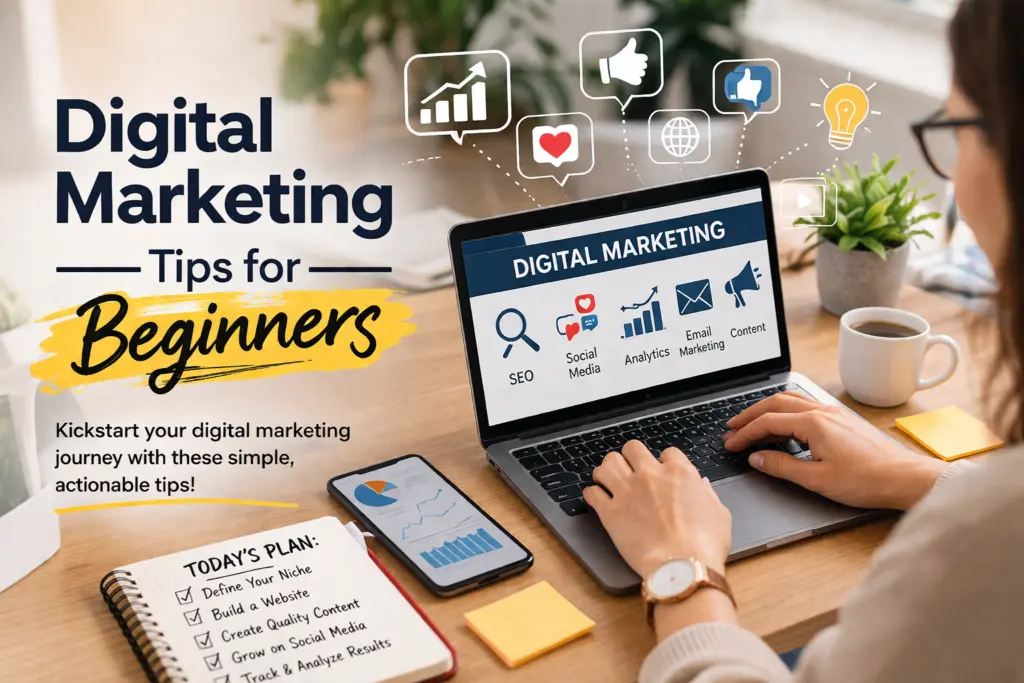
For beginners, digital marketing may seem overwhelming because it includes multiple channels such as search engine optimization (SEO), social media marketing, email marketing, content marketing, paid advertising, and more. However, understanding the fundamentals can help anyone create effective marketing campaigns and achieve measurable results.
The primary goal of digital marketing is to connect with potential customers through digital platforms and guide them through the buying journey. Whether you run a small business, manage a startup, or operate a personal blog, learning digital marketing can help increase visibility, generate leads, improve customer engagement, and boost revenue.
This guide covers everything beginners need to know about digital marketing tips, including its importance, step-by-step implementation strategies, benefits, risks, common mistakes, frequently asked questions, and expert recommendations. By applying these practical tips, you can build a stronger online presence and achieve sustainable growth in the digital landscape.
What is Digital Marketing Tips?
Digital marketing tips refer to practical strategies, techniques, and best practices used to promote products, services, brands, or content through online channels. These tips help businesses maximize their marketing efforts and improve their ability to attract, engage, and convert customers.
Digital marketing encompasses a wide range of activities, including optimizing websites for search engines, creating valuable content, running social media campaigns, sending targeted emails, and investing in paid advertising. Each channel plays a unique role in reaching different segments of an audience and supporting overall business goals.
For beginners, digital marketing tips provide a roadmap for navigating the online marketing world. Instead of relying on guesswork, businesses can use proven methods to improve visibility, drive traffic, increase conversions, and strengthen customer relationships. Successful digital marketing combines creativity, strategy, analytics, and consistency to deliver long-term results.
Why is Digital Marketing Important?
Digital marketing is important because it allows businesses to reach a global audience while maintaining precise targeting capabilities. Unlike traditional marketing, digital channels provide measurable results, making it easier to understand customer behavior and optimize campaigns for better performance.
Modern consumers often research products and services online before making purchasing decisions. Businesses without an online presence risk losing potential customers to competitors who actively engage their audience through websites, search engines, social media platforms, and email marketing campaigns. Digital marketing bridges this gap by connecting businesses with consumers where they spend most of their time.
Additionally, digital marketing offers cost-effective solutions for businesses of all sizes. Small companies can compete with larger organizations by using strategic content, SEO, and social media marketing. The ability to track data, measure performance, and adjust campaigns in real time makes digital marketing one of the most valuable tools for sustainable business growth.
Detailed Step-by-Step Guide
Step 1: Define Your Marketing Goals
Before starting any digital marketing campaign, establish clear objectives. Determine whether you want to increase website traffic, generate leads, improve brand awareness, boost sales, or grow your social media audience.
SMART goals are highly effective because they are specific, measurable, achievable, relevant, and time-bound. Clear goals provide direction and help evaluate campaign performance.
Step 2: Identify Your Target Audience
Understanding your audience is essential for successful marketing. Research demographics, interests, behaviors, pain points, and purchasing habits.
Creating customer personas helps you develop personalized marketing strategies. The more you understand your audience, the more effectively you can communicate your message and meet their needs.
Step 3: Build a Professional Website
Your website serves as the foundation of your digital marketing efforts. It should be visually appealing, easy to navigate, mobile-friendly, and optimized for fast loading speeds.
A professional website builds trust and provides visitors with the information they need to take action. Include clear calls-to-action, contact information, and valuable content throughout the site.
Step 4: Focus on Search Engine Optimization (SEO)
SEO helps improve your website’s visibility in search engine results. Start by researching relevant keywords that your target audience is searching for online.
Optimize page titles, meta descriptions, headings, images, URLs, and content. Create high-quality articles that answer user questions and provide genuine value. Strong SEO practices can generate consistent organic traffic over time.
Step 5: Create High-Quality Content
Content marketing is one of the most effective digital marketing strategies. Publish informative blog posts, guides, videos, infographics, and case studies that address audience needs.
Quality content builds authority, increases website traffic, and encourages social sharing. Consistently publishing useful content helps establish trust with potential customers.
Step 6: Utilize Social Media Marketing
Social media platforms allow businesses to connect directly with their audience. Choose platforms where your target audience is most active and create engaging content tailored to each platform.
Share educational posts, industry updates, videos, behind-the-scenes content, and customer success stories. Consistent engagement helps strengthen relationships and improve brand awareness.
Step 7: Start Email Marketing
Email marketing remains one of the highest-performing digital marketing channels. Build an email list by offering valuable resources such as guides, newsletters, or exclusive content.
Send personalized emails that provide value rather than focusing solely on promotions. Effective email campaigns can nurture leads and encourage repeat business.
Step 8: Invest in Paid Advertising
Paid advertising helps businesses reach a larger audience quickly. Platforms such as Google Ads and social media advertising offer advanced targeting options.
Begin with a small budget, test different campaigns, analyze performance metrics, and optimize based on results. Paid advertising can complement organic marketing efforts and accelerate growth.
Step 9: Monitor Analytics and Performance
Data analysis is essential for continuous improvement. Use analytics tools to track website traffic, user behavior, conversion rates, bounce rates, and campaign performance.
Regularly reviewing data helps identify strengths, weaknesses, and opportunities for optimization. Decisions based on accurate data typically produce better marketing outcomes.
Step 10: Continuously Improve Your Strategy
Digital marketing trends and technologies evolve constantly. Stay updated on industry developments and adapt your strategy accordingly.
Experiment with new content formats, advertising techniques, and audience engagement methods. Continuous improvement helps maintain competitiveness and achieve long-term success.
Benefits of Digital Marketing Tips
- Increases online visibility and brand awareness
- Helps reach a larger target audience
- Generates qualified leads
- Improves customer engagement
- Supports business growth and expansion
- Provides measurable campaign results
- Offers cost-effective marketing opportunities
- Enhances customer relationships
- Increases website traffic
- Improves conversion rates
- Enables personalized communication
- Supports long-term brand development
- Helps businesses compete effectively
- Encourages customer loyalty
- Provides valuable market insights
Disadvantages / Risks
- Requires ongoing time and effort
- Results may take time to appear
- High competition in many industries
- Constant algorithm changes
- Potential advertising costs
- Risk of poor audience targeting
- Negative online reviews can impact reputation
- Requires continuous content creation
- Data privacy concerns
- Technical challenges for beginners
- Rapidly changing digital trends
- Marketing mistakes can affect ROI
Common Mistakes to Avoid
One of the biggest mistakes beginners make is trying to market on every platform simultaneously. Instead, focus on a few channels where your target audience is most active. Concentrating efforts often produces better results than spreading resources too thin.
Another common error is ignoring SEO. Many businesses create excellent content but fail to optimize it for search engines. Without proper optimization, valuable content may struggle to reach its intended audience.
Inconsistent branding can also confuse potential customers. Maintain consistent messaging, visuals, and tone across all digital channels to strengthen brand recognition and trust.
Many marketers focus solely on attracting traffic while neglecting conversion optimization. Generating visitors is important, but encouraging those visitors to take action is equally critical for success.
Failing to analyze performance data is another costly mistake. Regular monitoring helps identify opportunities for improvement and ensures marketing efforts remain aligned with business goals.
Lastly, avoid creating content solely for promotional purposes. Audiences respond better to content that educates, informs, entertains, or solves problems rather than content focused exclusively on selling.
FAQs
1. What is the best digital marketing strategy for beginners?
Content marketing combined with SEO is often considered one of the best strategies for beginners. Creating valuable content and optimizing it for search engines can generate long-term traffic and establish authority within a niche.
2. How long does digital marketing take to show results?
Results vary depending on the strategy used. Paid advertising may produce immediate outcomes, while SEO and content marketing often require several months to achieve significant results. Consistency is essential for long-term success.
3. Is digital marketing expensive?
Digital marketing can be highly cost-effective. Many strategies, such as content creation, SEO, and social media marketing, can be implemented with minimal investment. Paid advertising budgets can be adjusted according to business needs.
4. Why is SEO important in digital marketing?
SEO improves website visibility in search engine results, making it easier for potential customers to find your content. Higher rankings often lead to increased traffic, leads, and sales.
5. Which social media platform is best for marketing?
The best platform depends on your target audience and industry. Facebook, Instagram, LinkedIn, YouTube, TikTok, and X each serve different purposes and demographics. Research audience behavior before selecting platforms.
6. What skills are needed for digital marketing?
Important skills include content creation, SEO, social media management, analytics, communication, email marketing, advertising, creativity, and problem-solving. Continuous learning is essential due to changing industry trends.
7. Can small businesses benefit from digital marketing?
Yes, digital marketing is particularly beneficial for small businesses because it provides affordable methods to reach targeted audiences, compete with larger companies, and build brand awareness.
8. How can I measure digital marketing success?
Success can be measured using key performance indicators such as website traffic, conversion rates, engagement metrics, lead generation, sales growth, click-through rates, and return on investment.
Expert Tips & Bonus Points
Focus on delivering value before promoting products or services. Helpful content builds trust and encourages long-term customer relationships.
Prioritize mobile optimization because a large percentage of users access websites through smartphones and tablets. A poor mobile experience can reduce engagement and conversions.
Use video marketing whenever possible. Videos often generate higher engagement rates and can effectively communicate complex information in an easily digestible format.
Develop a content calendar to maintain consistency. Planning content in advance helps ensure regular publishing and better audience engagement.
Leverage user-generated content and customer testimonials to build credibility. Social proof often influences purchasing decisions and strengthens brand trust.
Invest time in understanding analytics. Data-driven decisions can significantly improve marketing performance and maximize return on investment.
Stay updated on industry trends, search engine updates, and emerging technologies. Continuous learning helps marketers remain competitive in a rapidly changing environment.
Build an email list from the beginning. Owned audiences provide greater control compared to relying exclusively on third-party platforms.
Test different headlines, images, calls-to-action, and content formats. Small improvements can have a substantial impact on overall marketing performance.
Focus on long-term growth rather than quick wins. Sustainable strategies typically produce more consistent and lasting results.
Conclusion
Digital marketing has transformed the way businesses connect with customers, build brand awareness, and generate revenue. For beginners, understanding the fundamentals is the first step toward creating effective online marketing campaigns. While the digital landscape may seem complex at first, focusing on proven strategies such as SEO, content marketing, social media engagement, email marketing, and data analysis can simplify the learning process and deliver meaningful results.
Success in digital marketing does not happen overnight. It requires patience, consistency, and a willingness to adapt to changing trends and technologies. Businesses that prioritize understanding their audience, creating valuable content, and continuously optimizing their strategies are more likely to achieve sustainable growth and long-term success.
By following the digital marketing tips outlined in this guide, beginners can build a strong foundation for their online marketing efforts. Whether your goal is increasing traffic, generating leads, improving customer engagement, or growing sales, the principles discussed here can help guide your journey. Start with clear goals, focus on delivering value, track your performance, and remain committed to continuous improvement. With dedication and strategic execution, digital marketing can become one of the most powerful tools for achieving your business objectives and expanding your online presence.