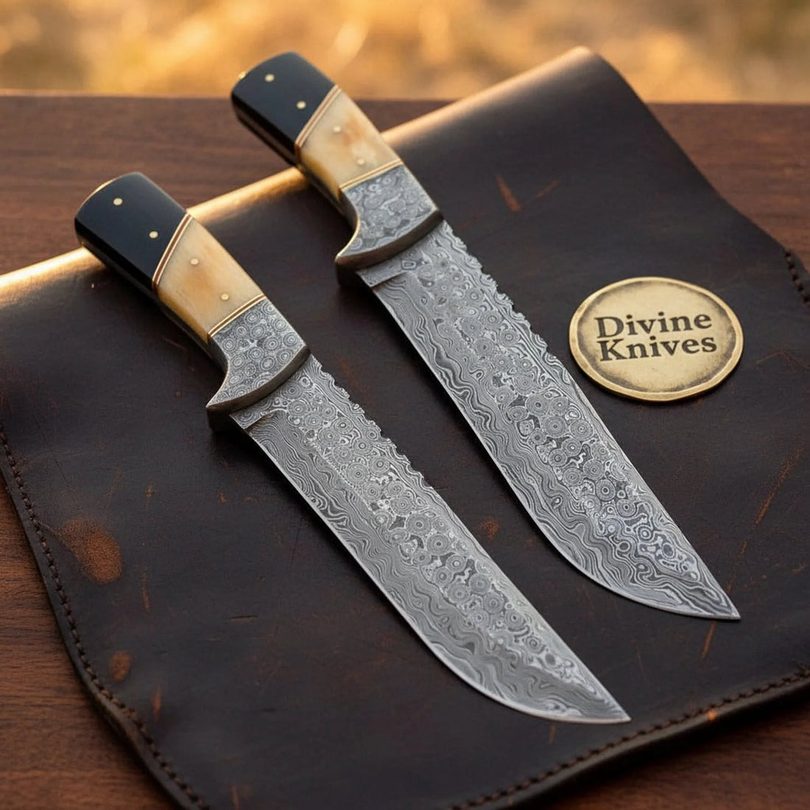

The best handmade Bowie knives in the USA share three things: a hand-forged blade, a full-tang build, and natural handle materials fitted by hand. Factory knives can be sharp, but they rarely carry the balance, character, and lifetime value of a blade shaped at the forge.
For nearly two centuries, the Bowie knife has been America’s signature fixed blade. It rode with frontiersmen, served soldiers and ranchers, and today hangs on the belts of hunters and sits in the display cases of serious collectors. Yet the market is now flooded with stamped, mass-produced “Bowie-style” knives that look the part and fail in the field.
This guide cuts through that noise. You will learn what separates a true handmade Bowie from a factory copy, which steels and handles are worth paying for, and how to choose the right size for hunting, camping, or collecting. Along the way, we will show you why Divine Knives has become a trusted name for American buyers who want hand-forged quality without custom-shop waiting lists.
If you hunt, you may also want a companion blade for finer work. A matched set like the Divine Knives Horn and Bone Hunting Knife Pair pairs a 6.5-inch and a 5.5-inch hand-forged clip point blade, so you can carry a Bowie for heavy tasks and a smaller hunter for detail work.
What Makes a True Handmade Bowie Knife?
A true Bowie knife is a large fixed blade with a clip point, a crossguard, and enough weight to chop as well as cut. A handmade Bowie adds one more requirement: a person, not a press, shapes the steel.
A Short History of the American Bowie
The Bowie knife takes its name from frontiersman Jim Bowie, who made it famous after the 1827 Sandbar Fight on the Mississippi River. His brother Rezin is usually credited with the original design. After Jim Bowie died at the Alamo in 1836, demand for “Bowie knives” exploded across the frontier, and blacksmiths everywhere began forging their own versions.
That is why no single “correct” Bowie exists. What survived is a family of features that every quality Bowie still carries today.
Anatomy of a Classic Bowie
- Clip point blade: The spine dips toward the tip, creating a fine, controllable point for piercing and detail cuts.
- Swedge or false edge: A sharpened or beveled section along the clipped spine that reduces weight and improves penetration.
- Crossguard: Usually brass or steel, it stops your hand from sliding onto the edge during hard use.
- Full tang: The steel runs the full length of the handle, giving strength and balance.
- Fuller: An optional groove along the blade that lightens it without sacrificing stiffness.
- Blade length: Traditional Bowies run from about 6 to 12 inches; 7 to 9 inches is the most versatile range.
Handmade vs. Factory: The Real Difference
Factory knives are stamped from sheet steel and machine-ground in batches. A hand-forged blade is heated, hammered, shaped, heat-treated, and ground by an artisan. Forging refines the steel’s grain structure, and hand grinding lets the maker tune the edge geometry and balance of each knife. The result is a blade with better edge retention, a livelier feel in the hand, and a character no two knives share.
Why Divine Knives Stands Out for American Buyers
Divine Knives earns its place among the best handmade Bowie knife makers because every blade is individually hand-forged by skilled artisans, then finished, sheathed, and shipped with tracking to customers across the USA. You get forge-made character at prices that start well below most custom-shop waiting lists.
Hand-Forged, One Knife at a Time
Each Divine Knives Bowie begins as a high-carbon steel or layered Damascus steel billet. Artisans forge, heat-treat, and grind every blade by hand. Because the work is manual, no two Damascus patterns are identical, and natural handle materials carry their own grain and color. You are not buying a serial number; you are buying a one-of-one.
Materials Chosen for Real Use
- Blade steels: High-carbon steel for toughness and easy field sharpening, Damascus steel for edge performance plus a striking layered pattern, and D2 tool steel on select Western models.
- Handles: Stag antler, camel bone, buffalo horn, rosewood, walnut, pakkawood, stacked leather, Micarta, and G10.
- Fittings: Solid brass guards, pommels, and pins that resist corrosion and add heft.
- Construction: Full tang across the classic Bowie line for strength and balance.
What Comes in the Box
Classic Bowie knives from Divine Knives ship with a genuine leather sheath, a protective oil coating, blade care oil, and a certificate of craftsmanship. That means your knife is ready to carry, store, or gift the day it arrives.
Buyer Confidence
Trust is part of expertise. Divine Knives shows a 4.9 Trustscore from more than 1,500 reviews on its store, offers tracked delivery to the USA in roughly 5 to 9 business days, and accepts returns on unused knives within 14 days. Customers can reach the team by US phone, email, or WhatsApp before they buy, which matters when you are choosing a knife you plan to keep for decades.
Best Handmade Bowie Knives in the USA: Top Divine Knives Picks
The Divine Knives Classic Bowie Knife collection holds more than 60 hand-forged models, from $160 working knives to a $2,990 heirloom Damascus piece. These seven stand out for specific buyers.
| Knife | Best For | Handle | Price (USD) |
| Stag Antler Classic Bowie | Traditional style and display | Stag antler | $218 |
| Walnut Handle Clip Point Bowie | All-round hunting | Walnut | $222 |
| Fileworked Spine Bone Bowie | Collectors | White bone, brass | $234 |
| Antler D2 Steel Western Bowie | Best value working knife | Natural antler | $170 |
| Fullered Clip Point Pakkawood Bowie | Low-maintenance field use | Pakkawood | $266 |
| Dundee Bowie Knife Duo | Gifting | Stacked handles, brass | $299 |
| Stag Horn Segmented Damascus Bowie | Heirloom investment | Banded stag horn | $2,990 |
Prices as listed on divineknives.us in October 2026.
1. Stag Antler Classic Bowie: Best Traditional Bowie
If you picture a frontier Bowie, this is it. The natural stag antler handle gives a grippy, textured feel, and every piece of antler is different. It is built to honor the 19th-century look, making it a favorite for historical display and reenactors who still want a usable blade.
2. Walnut Handle Clip Point Bowie: Best All-Round Hunting Bowie
A fullered layered steel blade keeps weight down while the clip point handles skinning and camp chores. Warm walnut and a tooled leather sheath make it as handsome on the belt as it is practical in deer camp.
3. Fileworked Spine Bone Bowie: Best for Collectors
Hand filework along the spine is one of the clearest signs of handmade craft, because every notch is cut by hand. Paired with a white bone handle and a solid brass guard and pommel, this is the knife you show off at the cabinet.
4. Antler D2 Steel Western Bowie: Best Value
D2 tool steel is known for strong wear resistance and long edge life. Combined with a natural antler handle, it offers serious working performance at one of the lowest prices in the collection.
5. Fullered Clip Point Pakkawood Bowie: Best Low-Maintenance Handle
Pakkawood is resin-stabilized wood, so it shrugs off moisture better than raw hardwood. That makes this Bowie a smart pick for wet hunts, fishing trips, and anyone who wants wood looks without extra care.
6. Dundee Bowie Knife Duo: Best Gift Set
Two Dundee-style Bowies with brass fittings and stacked handles arrive as a matched pair. It is an easy choice for father-and-son gifts, groomsmen, or a collector filling out a display.
7. Stag Horn Segmented Damascus Bowie: Best Heirloom Piece
This is the flagship. Segmented Damascus steel and a banded stag horn handle make it a true showpiece, built to be passed down rather than simply used.
How to Choose the Best Handmade Bowie Knife
Pick your Bowie by job first, then steel, then handle. A collector’s showpiece and a deer-camp workhorse need different priorities, even if both look classic.
1. Match the Blade Length to the Job
- 6 to 7 inches: Best for hunters who field dress game and want easier carry.
- 8 to 9 inches: The all-round sweet spot for camping, chopping kindling, and general outdoor work.
- 10 inches and up: Traditional frontier size, ideal for collectors, display, and heavy chopping.
2. Choose the Right Steel
| Steel | Strengths | Trade-offs |
| High-carbon steel | Tough, easy to sharpen in the field | Needs oiling to prevent rust |
| Damascus steel | Strong edge, unique layered pattern | Higher price, needs regular care |
| D2 tool steel | Excellent wear resistance, long edge life | Harder to sharpen at home |
3. Pick a Handle You Will Enjoy Holding
Stag and bone deliver tradition and texture. Walnut and rosewood feel warm and look classic. Pakkawood, Micarta, and G10 resist moisture and suit hard, wet use. Buffalo horn and stacked leather add a distinctive, old-world look.
4. Check the Build Details
Insist on full-tang construction, tight fit between the guard and handle, and pinned rather than only glued scales. A real leather sheath matters too; it protects the edge and keeps the knife secure on your belt.
5. Know Your Local Laws
Knife laws vary by state and city across the USA, especially for carrying large fixed blades. Ownership is legal in most places, but always check your state and local rules before carrying a Bowie in public. This guide is not legal advice.
How to Care for Your Handmade Bowie Knife
A hand-forged Bowie can last for generations if you keep it clean, dry, and oiled. Five habits do most of the work.
- Clean after every use. Hand wash with mild soap and warm water. Never put it in a dishwasher.
- Dry it completely. Wipe the blade, guard, and handle with a soft cloth right away, since moisture is what causes rust on carbon and Damascus steel.
- Oil the blade. Apply a thin coat of mineral oil before storage to block moisture.
- Store it out of the sheath long-term. Leather can trap humidity, so keep the knife in a dry place and use the sheath for carry.
- Sharpen the right way. Touch up the edge with a whetstone or honing rod every few months, depending on use. Avoid cheap pull-through sharpeners, which can damage a hand-ground edge.
Natural handles like stag, bone, and horn also benefit from an occasional wipe with a light oil or wax to prevent drying and cracking.
Frequently Asked Questions
What is the best handmade Bowie knife in the USA?
The best handmade Bowie knife depends on your use. For all-round hunting, a fullered clip point Bowie with a walnut or pakkawood handle is a strong choice. For collecting, look for filework, stag, or Damascus steel. Divine Knives offers hand-forged options for both in its Classic Bowie collection.
What is the difference between a handmade and a factory Bowie knife?
A factory Bowie is stamped and machine-ground in batches. A handmade Bowie is forged, heat-treated, and ground by an artisan, which gives better balance, a refined edge, and a one-of-a-kind finish.
Is Damascus steel good for a Bowie knife?
Yes. Quality Damascus steel combines a hard edge with a tough body and adds a unique layered pattern. It needs regular cleaning and oiling to prevent rust.
What blade length is best for a Bowie knife?
For most people, 7 to 9 inches is ideal. It is long enough to chop and baton wood, yet still manageable for skinning and camp tasks.
Are Divine Knives Bowie knives full tang?
Yes. Every knife in the Divine Knives Classic Bowie collection is full tang, so the steel runs through the entire handle for strength and balance.
Does Divine Knives ship to the USA, and how long does it take?
Yes. Divine Knives ships to customers across the USA with tracking, and delivery typically takes about 5 to 9 business days.
Do Divine Knives Bowie knives come with a sheath?
Yes. Classic Bowie knives ship with a genuine leather sheath, along with blade care oil and a certificate of craftsmanship.
Is it legal to own a Bowie knife in the USA?
Owning a Bowie knife is legal in most of the USA, but carry laws for large fixed blades differ by state and city. Check your local laws before carrying one in public.
How often should I sharpen a handmade Bowie knife?
With normal use, a touch-up every few months on a whetstone or honing rod is enough. Heavy field use may call for more frequent sharpening.
Final Verdict: Own a Bowie Worth Passing Down
The best handmade Bowie knives in the USA are hand-forged, full tang, fitted with natural or stabilized handles, and backed by a seller you can actually reach. Divine Knives checks every one of those boxes, with over 60 classic Bowie models covering hunters, campers, collectors, and gift buyers.
Start with your main use, choose your steel and handle, and pick a length that fits how you will carry it. Then browse the full Divine Knives Classic Bowie Knife collection and find the hand-forged blade you will still be proud to own decades from now.